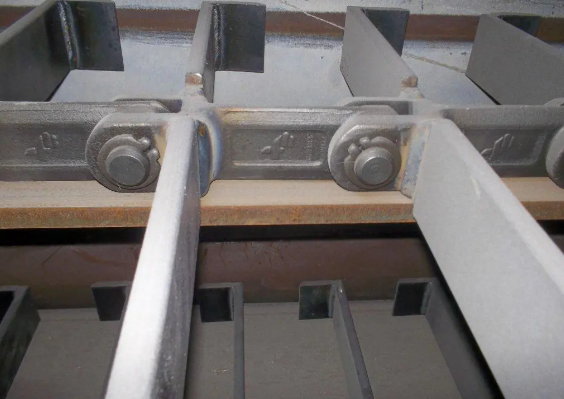
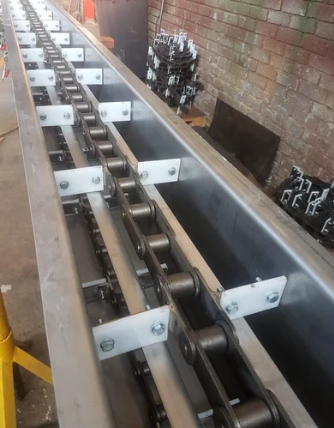
Armored Conveyor (AFC): This is one of the most critical applications, especially in longwall coal mining. The AFC is the backbone of the longwall system, using multiple forged chain to move large quantities of coal directly from the shearer along the coal seam face. They are designed to operate under high loads and highly abrasive conditions.
Beam Loader (BSL): The BSL is located at the end of the AFC and uses forged chain to transport coal from the AFC to the main mine conveyor belt, ensuring a continuous and efficient flow of material.
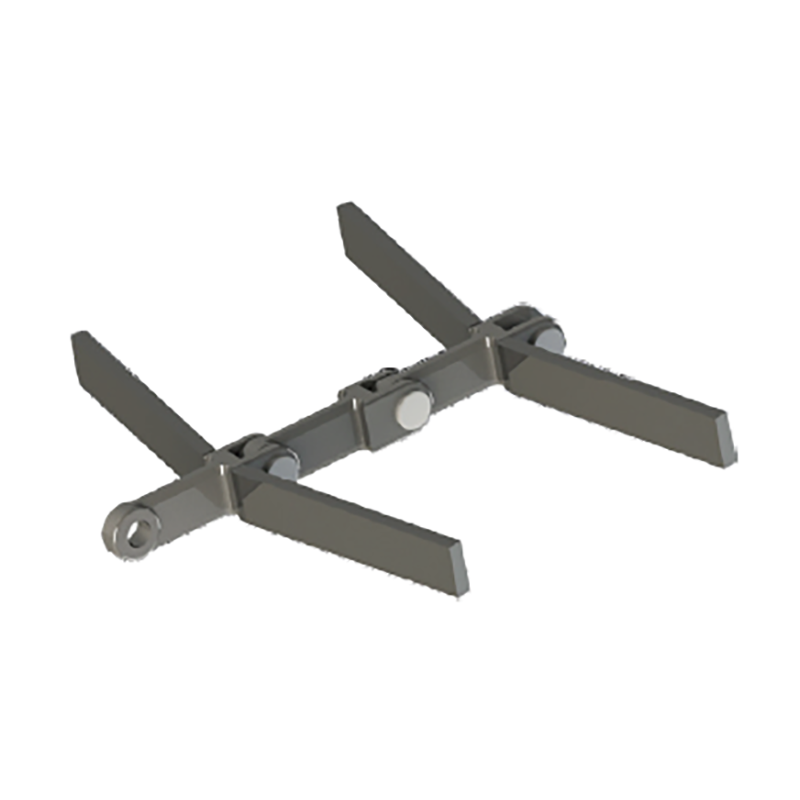
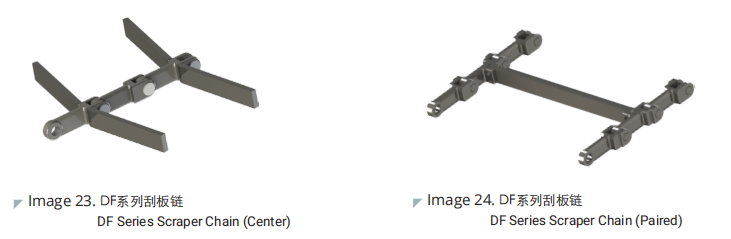
Underground Scraper Conveyor/Drag Chain Conveyor: Widely used in underground mines, it is used to transport coal, ore and waste along tunnels, lanes and roadways. The chain equipped with scrapers efficiently drags the material along the trough. Its rugged and durable characteristics make it ideal for narrow, dusty and abrasive underground environments.
Plow Systems: In some continuous mining operations, forged chain chains are an integral part of the plow movement, which mechanically shears coal from the seam and loads it onto a conveyor.
Bottom Ash and Slag Handling: In power plants such as coal-fired power plants or metallurgical facilities associated with mining operations, these chains are used in conveyors to handle abrasive and often hot ash or slag from boilers and furnaces.
Heavy Duty Feeders: Used in dedicated feeder systems, usually located below a hopper or primary crusher, to control the flow of run of ore (ROM) material into a processing circuit. They can handle large, unclassified, and abrasive materials.
Cement and Steel Industries: While these industries are not exclusive to mining, they share many of the same material handling challenges. Forged chain chains are used to convey abrasive raw materials, clinker (which is often hot and abrasive), or scrap steel.