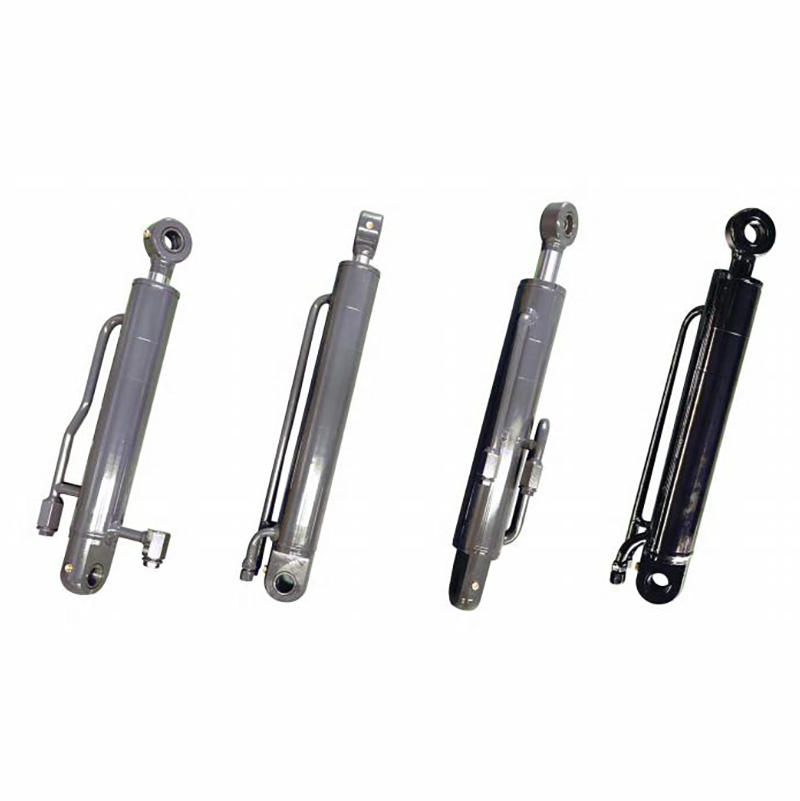
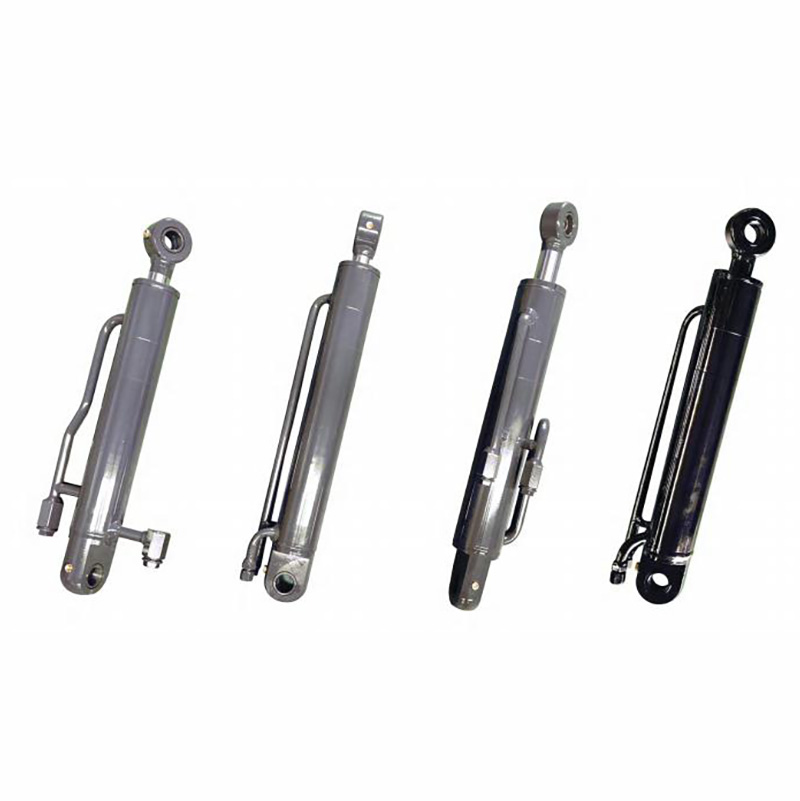
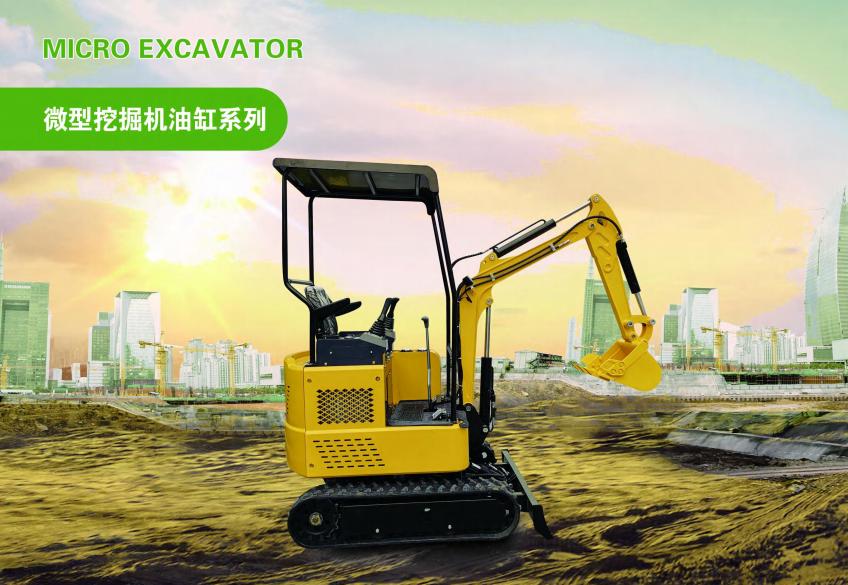
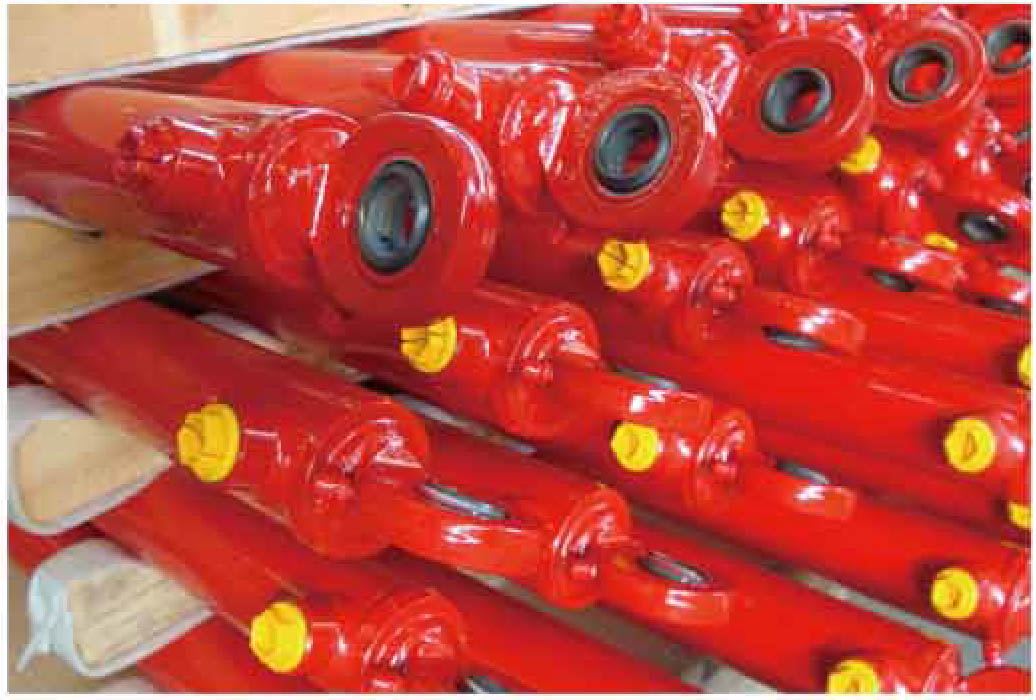
Boom Cylinder:
Function: Raises and lowers the main boom, providing the machine's primary vertical reach.
Purpose: Raises the boom and bucket assembly to dump material onto trucks, over obstacles, and position the work device for excavation.
Boom (or Stick) Cylinder:
Function: Extends and retracts the boom, providing horizontal reach.
Purpose: Primary excavation actions, including trenching, pulling material toward the machine, and grading.
Bucket Cylinder:
Function: Rolls the bucket inward (for digging and carrying) or dumps it outward.
Purpose: Performs final digging movements, such as backfilling trenches, grading slopes, and precisely placing materials.
Swing Cylinder (some models)/Swing Motor:
Function: While many modern excavators use hydraulic motors for 360-degree rotation, some designs may use cylinders for limited swing motion. The principle is the same: providing rotation.
Application: Allows the superstructure (housing) to swing left and right for digging, dumping, and positioning without moving the tracks, which is critical for efficient trenching.
Travel Motor (hydraulic, usually not a cylinder):
Note: Machine movement is typically achieved by a hydraulic motor driving the tracks. However, a hydraulic power source is an integral part of the cylinder system.
Application: Provides independent track control for precise maneuvering, counter-rotation (pivoting in place), and stable positioning on uneven ground.
Attachment Control (e.g., Hydraulic Thumb):
Function: Uses a separate cylinder to actuate a hydraulic thumb or other powered attachment.
Application: Grips and handles irregular objects such as rocks, logs, or gravel, significantly improving loading and sorting efficiency.