1. Compression and Bale Forming:
This is the basic function of the cylinder. It provides the tremendous linear force required to compress the loose crop material (hay, straw, silage) within the bale chamber.
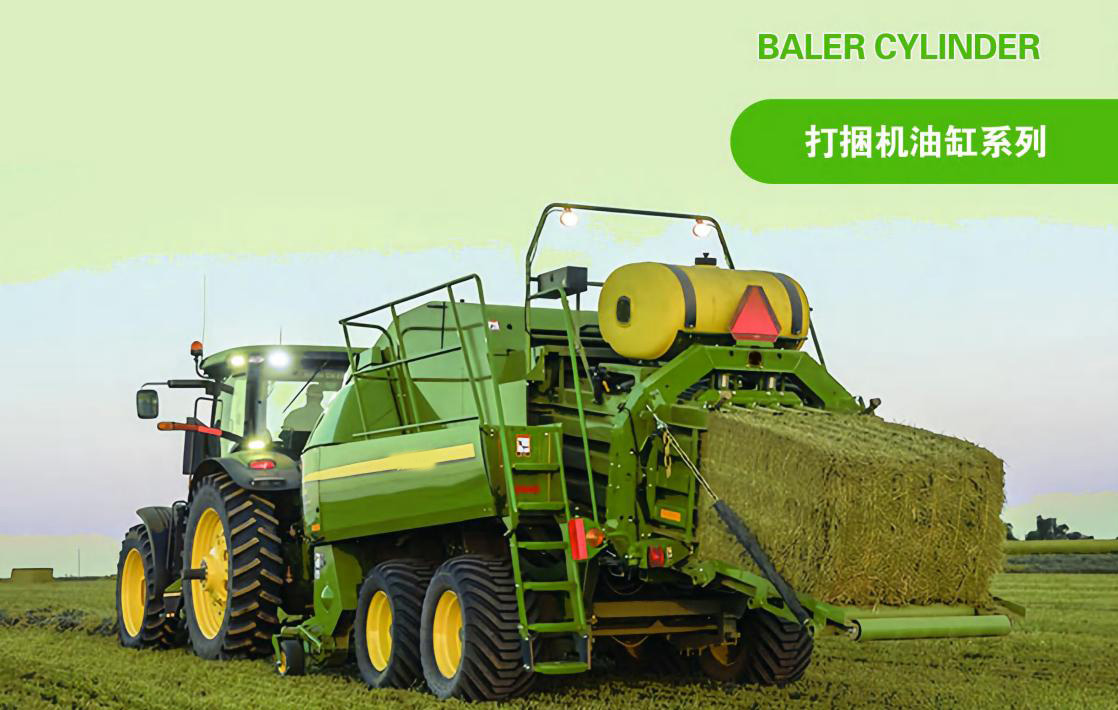
In rectangular balers, the cylinder drives the plunger in reciprocating motion, repeatedly compressing the material and forming it into a tight, rectangular bale with the previous material.
In round balers, the cylinder typically controls the belt tension or the position of the rolling chamber, applying constant pressure from all directions to the expanding bale during rotation, forming a tight, cylindrical package.
2. Adjusting Bale Density:
The hydraulic system controlling the cylinders allows the operator to adjust and maintain a specific bale density.
By increasing or decreasing the hydraulic pressure applied to the cylinders, the operator can produce looser, tighter, and heavier bales. This is crucial for optimizing transportation costs, saving storage space, and maintaining forage quality.
3. Ejecting the Finished Bale:
Once the bale reaches its maximum size (determined by sensors or preset dimensions), the baler's mechanism initiates the ejection process.
On round balers, hydraulic cylinders (often used in conjunction with the tensioning mechanism or separately) are used to open the machine's rear door to eject the finished bale into the field.
On large square balers, cylinders operate the binding mechanism (e.g., needles and knotters) and are sometimes used to assist in moving bales to or from the built-in stacker.
4. Operating the Pickup Header:
Smaller hydraulic cylinders on the baler are used to raise and lower the pickup header. This allows the operator to transport the baler on the road and adjust the header height to suit the ground contours when collecting hay.
5. Twine/Bale System Operation:
In square balers, a separate set of small, fast-acting cylinders is responsible for the precise operation of the tying mechanism (needles and knotters), which binds the bales with twine or wire.