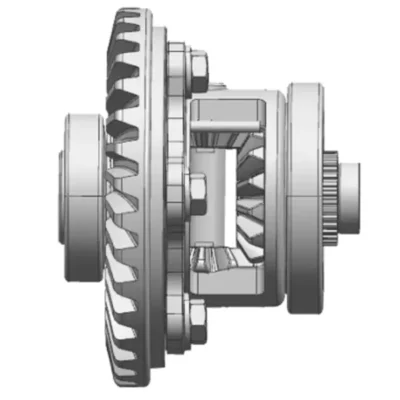
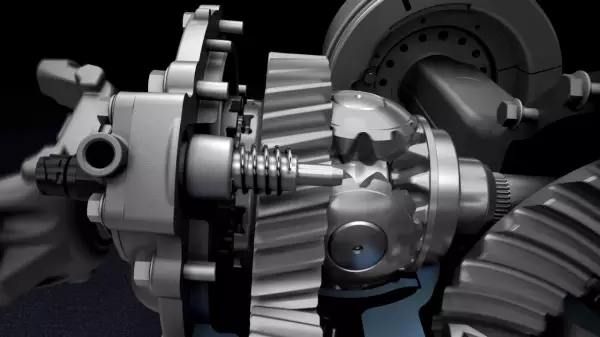
Differential Assembly Structure
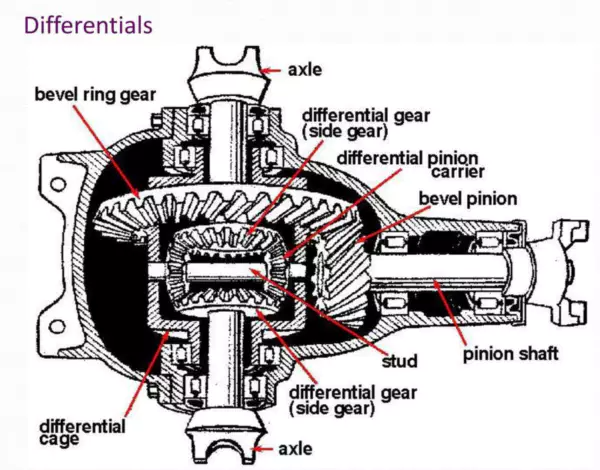
Differential is a mechanical device used to coordinate the rotational speed between different axles, typically used between the wheels of cars, trucks, and other vehicles. The differential mainly consists of the following parts:
Differential Assembly Structure
Input shaft: The input shaft is the first part of the differential, connected to the vehicle engine. The input shaft transmits power to the differential through the torque generated by the engine.
Differential case: The differential case is the second part of the differential, which surrounds the input and output shafts and bears the stress generated by the vehicle suspension system and tires.
Output shaft: The output shaft is the third part of the differential, connecting the rear or front wheels of the vehicle and transmitting power to the wheels through it.
Planetary gear set: The planetary gear set is the fourth part of the differential, usually composed of multiple planetary gears, gears, brackets, and bearings. The planetary gear set is used to coordinate the speed between the input and output shafts, ensuring that the speed between the wheels remains consistent.
Sliding differential: A sliding differential is the last part of a differential, usually composed of two planetary gear sets, one connected to the input shaft and the other to the output shaft. When the vehicle turns or drives on uneven roads, the sliding differential allows for different rotational speeds between the wheels on both sides, thereby achieving smooth turning or driving of the vehicle.
Overall, the differential is a complex mechanical device that achieves coordinated speed between different axles through various mechanical linkage methods, improving vehicle traction and driving stability.