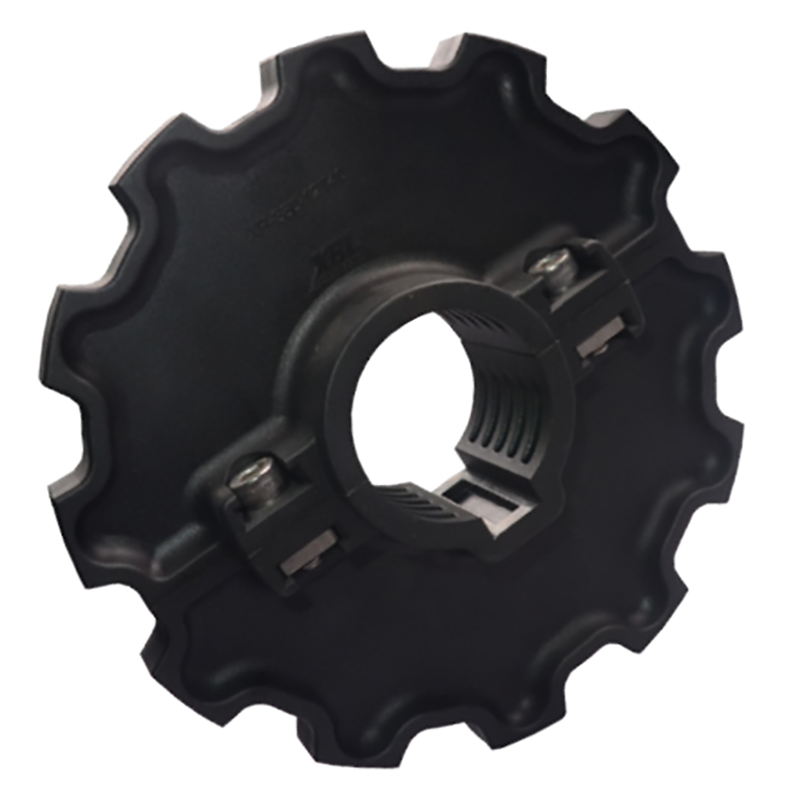
Advantages of using plastic sprockets
Compared with plastic sprockets of the same size, metal sprockets operate well and have good dimensional stability when temperature and humidity change. But compared with metal materials, plastics have many advantages in cost, design, processing and performance.
Compared with metal forming, the inherent design freedom of plastic forming ensures more efficient sprocket manufacturing. Plastic can be used to shape internal gears, gear sets, worm gears and other products, but it is difficult to use metal materials to shape at a reasonable price. Plastic sprockets are more widely used than metal sprockets, so they promote the development of gears to withstand higher loads and transmit greater power. Plastic chain wheel is also an important material to meet the requirements of low-noise operation, which requires the emergence of high-precision, new chain wheel and materials with excellent lubrication or flexibility.
Chain wheels made of plastic generally do not need secondary processing, so compared with metal chain wheels made of stamping parts and mechanical parts, the cost is reduced by 50% to 90%. Plastic sprockets are lighter and more inert than stainless steel sprockets, and can be used in environments where metal sprockets are prone to corrosion and degradation, such as the control of water meters and chemical equipment.
Compared with metal sprocket, plastic sprocket can deflect and deform to absorb impact load, and can better disperse local load changes caused by shaft deflection and staggered teeth. The inherent lubricating properties of many plastics make them ideal gear materials for printers, toys and other low load operating mechanisms (excluding lubricants). In addition to operating in a dry environment, sprockets can also be lubricated with grease or oil.