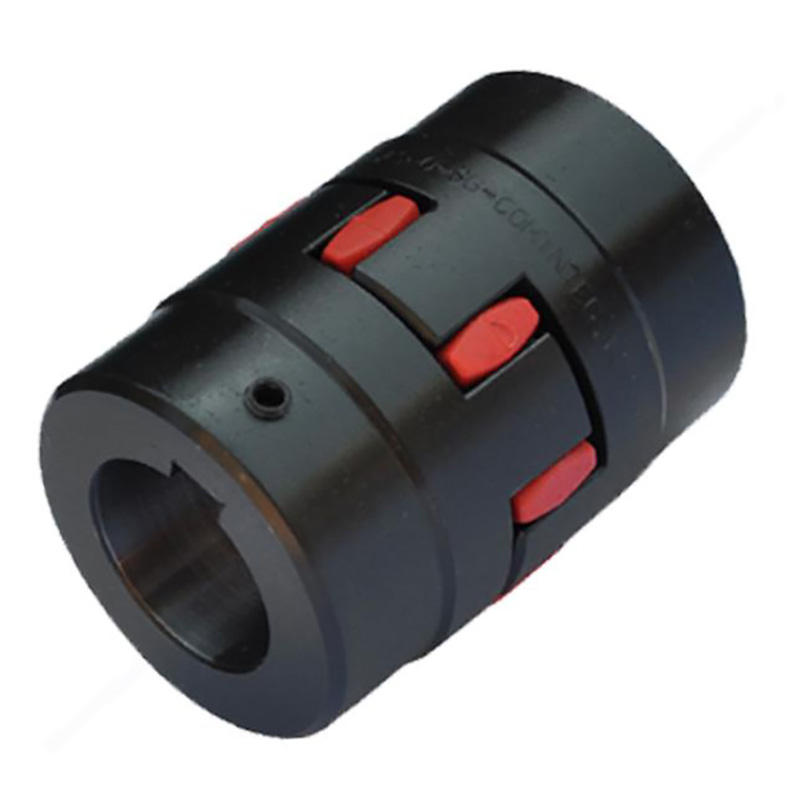
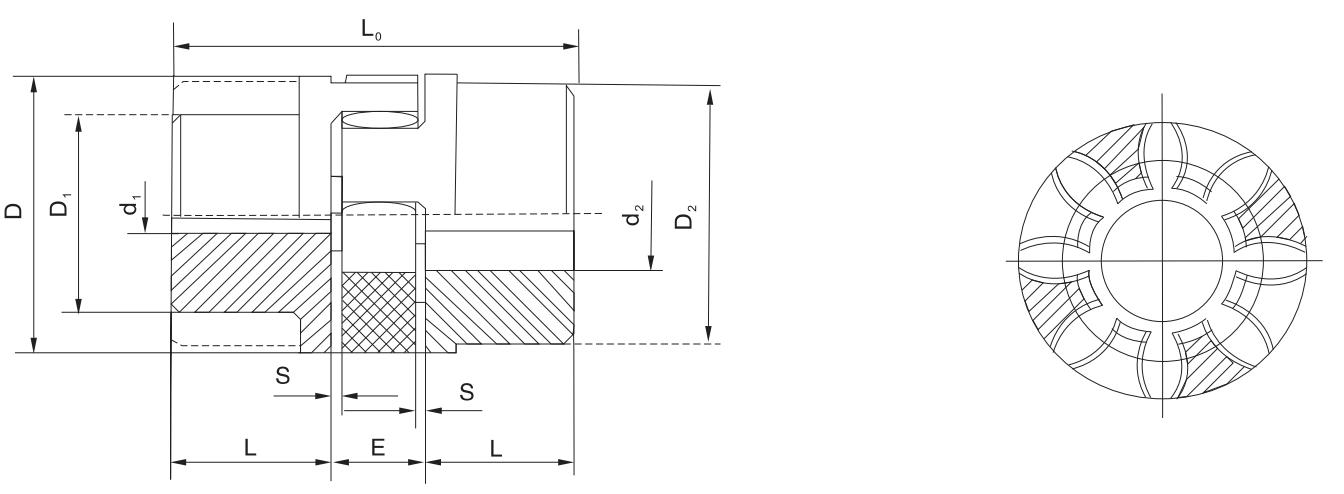
A jaw coupling is a type of general purpose power transmission coupling that also can be used in motion control (servo) applications. It is designed to transmit torque (by connecting two shafts) while damping system vibrations and accommodating misalignment, which protects other components from damage. Jaw couplings are composed of three parts: two metallic hubs and an elastomer insert called an element, but commonly referred to as a "spider". The three parts press fit together with a jaw from each hub fitted alternately with the lobes of the spider. Jaw coupling torque is transmitted through the elastomer lobes in compression.
Structural characteristics
Compact size, small inertia.
Plastic components for flexibility, cushioning, vibration, wear, operating temperature 35 +80 °C; maintenance.
Elastic limit by the protruding claw block, which can avoid the impact of internal deformation and centrifugal force generated by the external deformation produced. Claw large concave convex, so that the involute tooth on the surface pressure is small, even if the tooth to withstand the overload, the tooth still will not wear or deformation.
Axial plug-in installation.
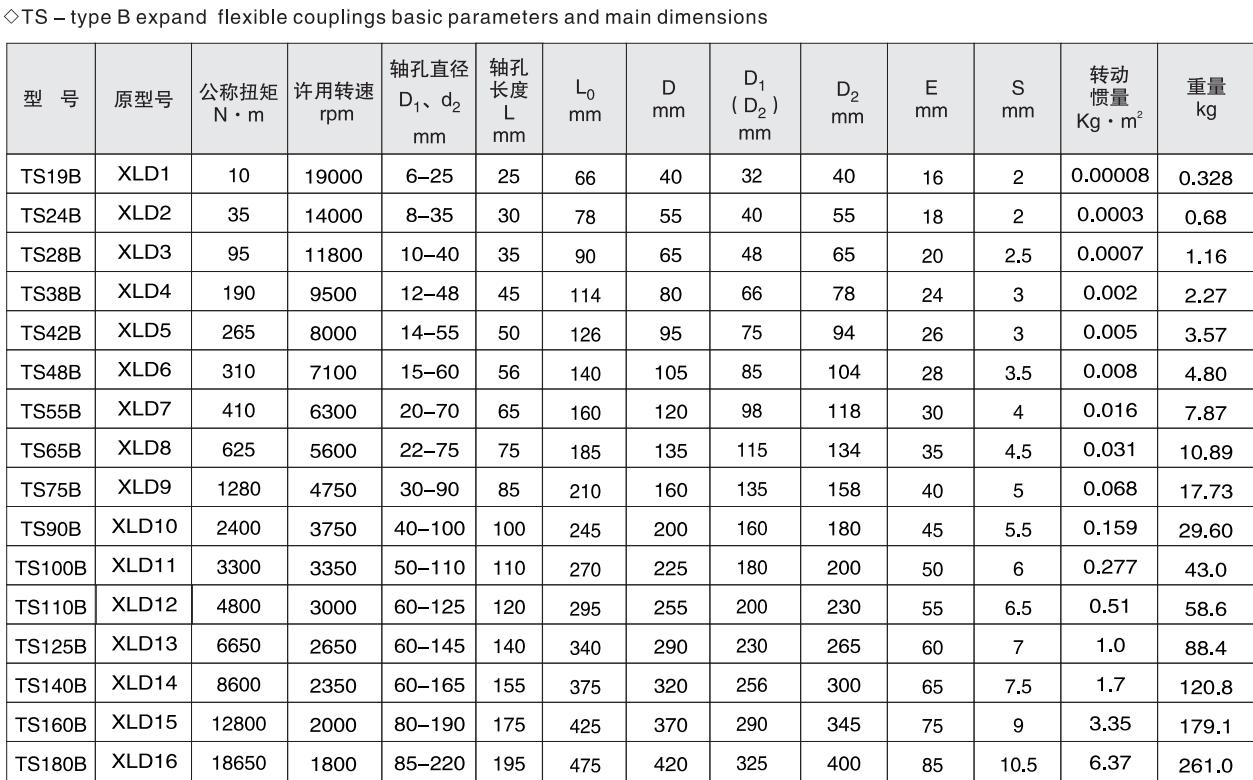
Nominal torque value when the elastic 92shA, 98shA torque increased by about 70%.
Structure characteristics
Sleeve using steel, particularly suitable for heavy load drive unit, such as lifts, rolling mills, construction machinery.
The coupling similar to S-A type, but more suitable for the installation of occasions aperture
Markers as TS-A type
Compact design, small moment of inertia
The hardness of 92shA elastomers of nominal torque values in the table